

This book represents the final project output, designed as educational and promotional material. It consists of two units. The first scientific part contains five original research papers.
The first paper, titled Tools For Developing/Enhancing Youth Awareness Towards Railway Heritage by Vladimír Hain and Eva Kráľová, effectively highlights the role of intergenerational cooperation in fostering youth awareness of railway heritage. It underscores the dynamic nature of cultural transmission, where younger generations actively reinterpret inherited traditions. The integration of interactive tools such as VR, MR, AI, and gamification is presented as a promising strategy for engaging young audiences. Notably, the paper acknowledges bidirectional knowledge transfer, where youth-driven initiatives can revitalise older generations’ interest in railway heritage.
Paper Railway Heritage Revisited – Critical Approaches examines railway heritage through critical heritage studies, moving beyond traditional preservation to highlight its social, cultural, and political dimensions. Anica Draganić and Mária Szilágyi explore the multifaceted nature of railway heritage, addressing its industrial and architectural significance, adaptive reuse potential, and broader socioeconomic and memory-related impacts. The study advocates for community-driven conservation, integrating digital tools like virtual reality and mapping with sustainable urban planning initiatives. Ultimately, it argues that railway heritage should be reinterpreted as a cultural asset fostering social dialogue, environmental sustainability, and community engagement, ensuring its continued relevance in contemporary urban and cultural landscapes.
Children’s Railways In Central And Eastern Europe – A Heritage Worth Preserving is a paper written by Károly Teleki, who offers a well-researched historical and contemporary analysis of children’s railways in Central and Eastern Europe, effectively situating them within broader discussions on railway heritage and sustainability. By tracing their origins in the Soviet Union and examining their evolution in post-socialist states, the study provides valuable insights into how these railways have been adapted or abandoned in changing socio-political contexts. The discussion of sustainable operations and revitalisation efforts is particularly compelling, reinforcing the argument for their continued preservation.
Lukáš Beran’s paper Border Stations: Their Typology, Architecture, and Fates examines cross-border railway stations in the Czech lands, analysing their typology, architecture, and contemporary use after the cessation of customs clearance functions. It categorises these stations into two main types: older stations along major railway lines that continue to serve regular rail traffic and newer stations in remote areas, where their viability depends largely on tourism. The study situates border stations within the broader historical development of railway architecture, contrasting standardised station designs with unique structures built at key junctions, particularly in major cities and border crossings. By tracing their architectural evolution and adaptive reuse, the paper highlights the challenges and opportunities in preserving these historically and functionally significant railway buildings.
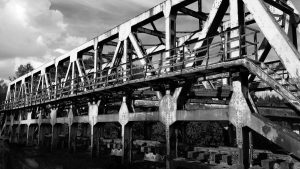
The last paper, titled Railways – The Nervous System of Industry, expands the perception of railway heritage beyond architecture, emphasising the overlooked industrial infrastructure—sidings, auxiliary facilities, and technical structures—that shaped economic development. Its author, Maciej Mądry, highlights the loss of such sites due to economic transitions and redevelopment pressures, stressing the need for systematic preservation strategies. Through case studies of sites like a coking plant and a sand railway bridge, the paper effectively illustrates the vulnerability of industrial railway heritage. While it compellingly advocates for broader recognition and adaptive reuse, a deeper discussion on policy solutions would strengthen its impact. Overall, it makes a valuable contribution by urging a more comprehensive approach to preserving industrial railway infrastructure.
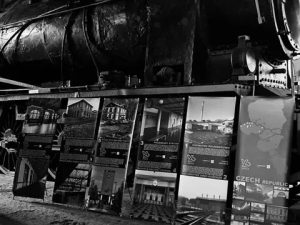
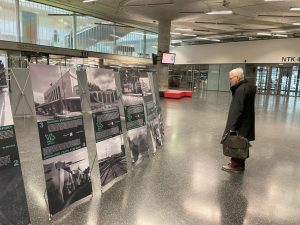
The second part of the publication has a promotional and educational character, considering that it presents a catalogue of 25 railway heritage sites from five partner countries, which are added to the RAIL4V4+V virtual route from the previous project.
download BOOK